
Industrial Biotechnology Students Gain Global Insights Through International Global Classroom Initiative
4, 8 and 11 June 2026 | UMPSA Gambang
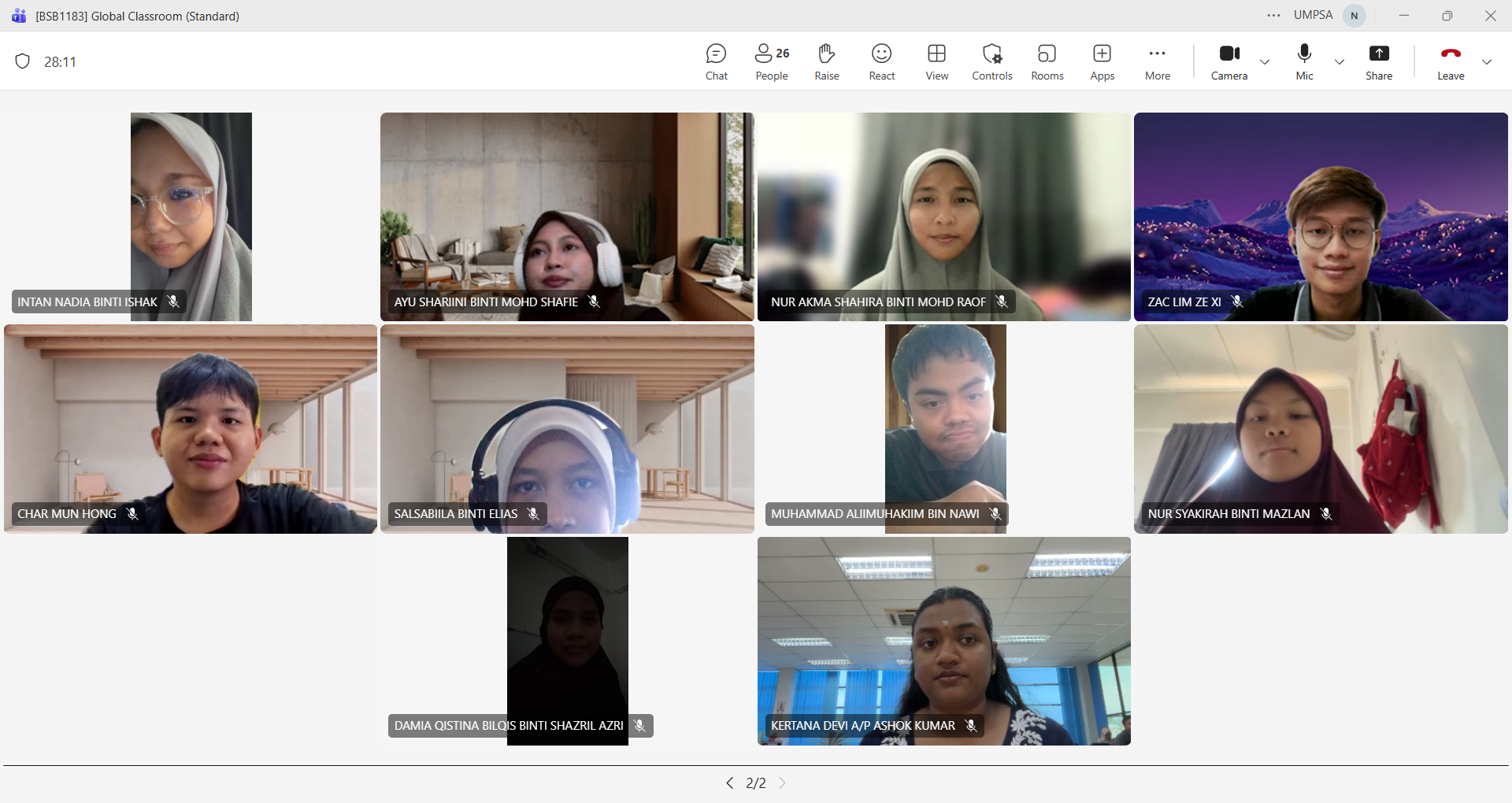
Students enrolled in BSB1183 Industrial Biotechnology at the Faculty of Industrial Sciences and Technology (FIST), Universiti Malaysia Pahang Al-Sultan Abdullah (UMPSA), recently participated in a Global Classroom initiative coordinated by Dr. Nor Adila Mhd Omar. The programme was conducted in collaboration with the University of Massachusetts Amherst, USA, and featured Dr. João Pedro Trigo as the invited international speaker.
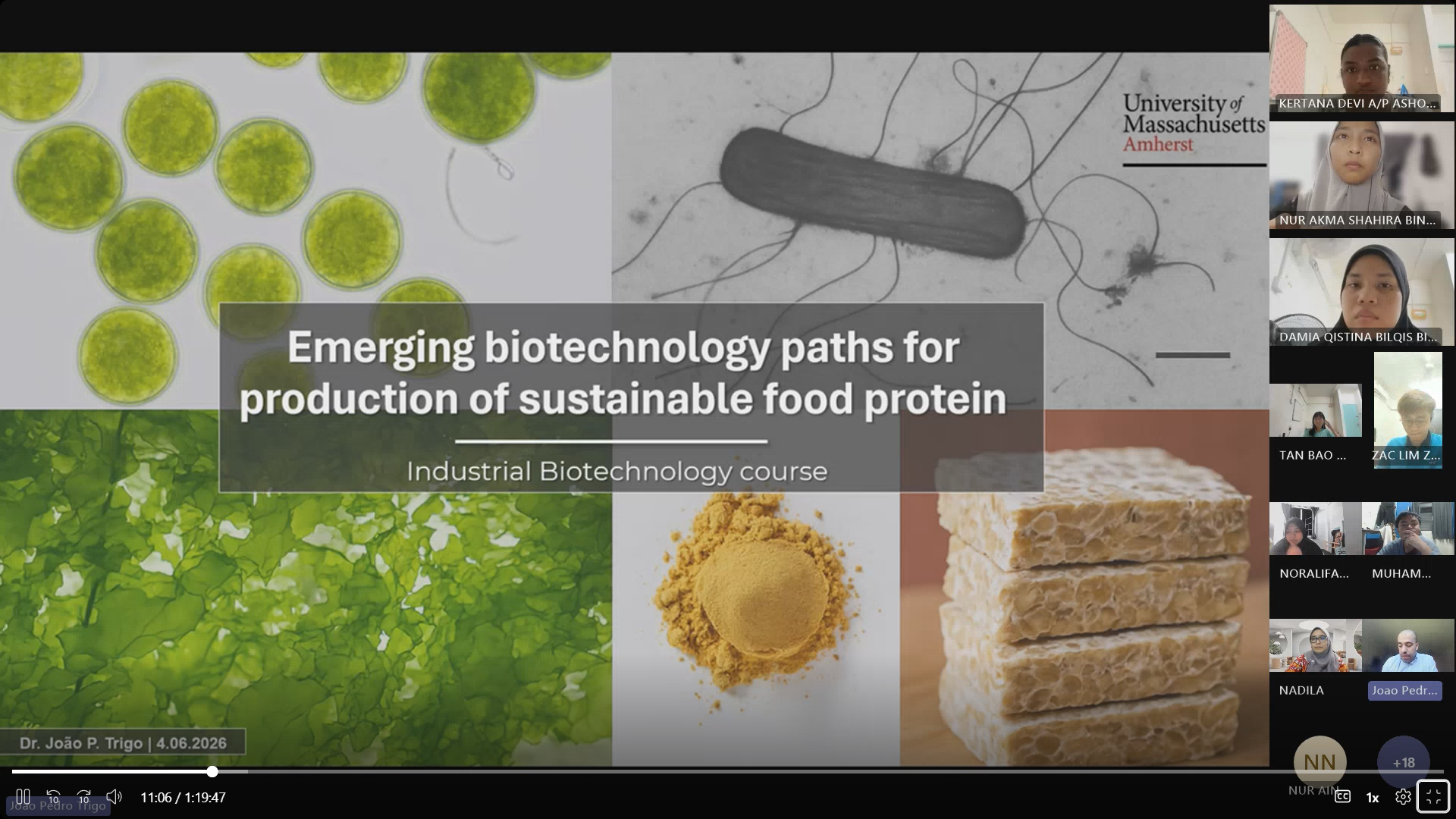
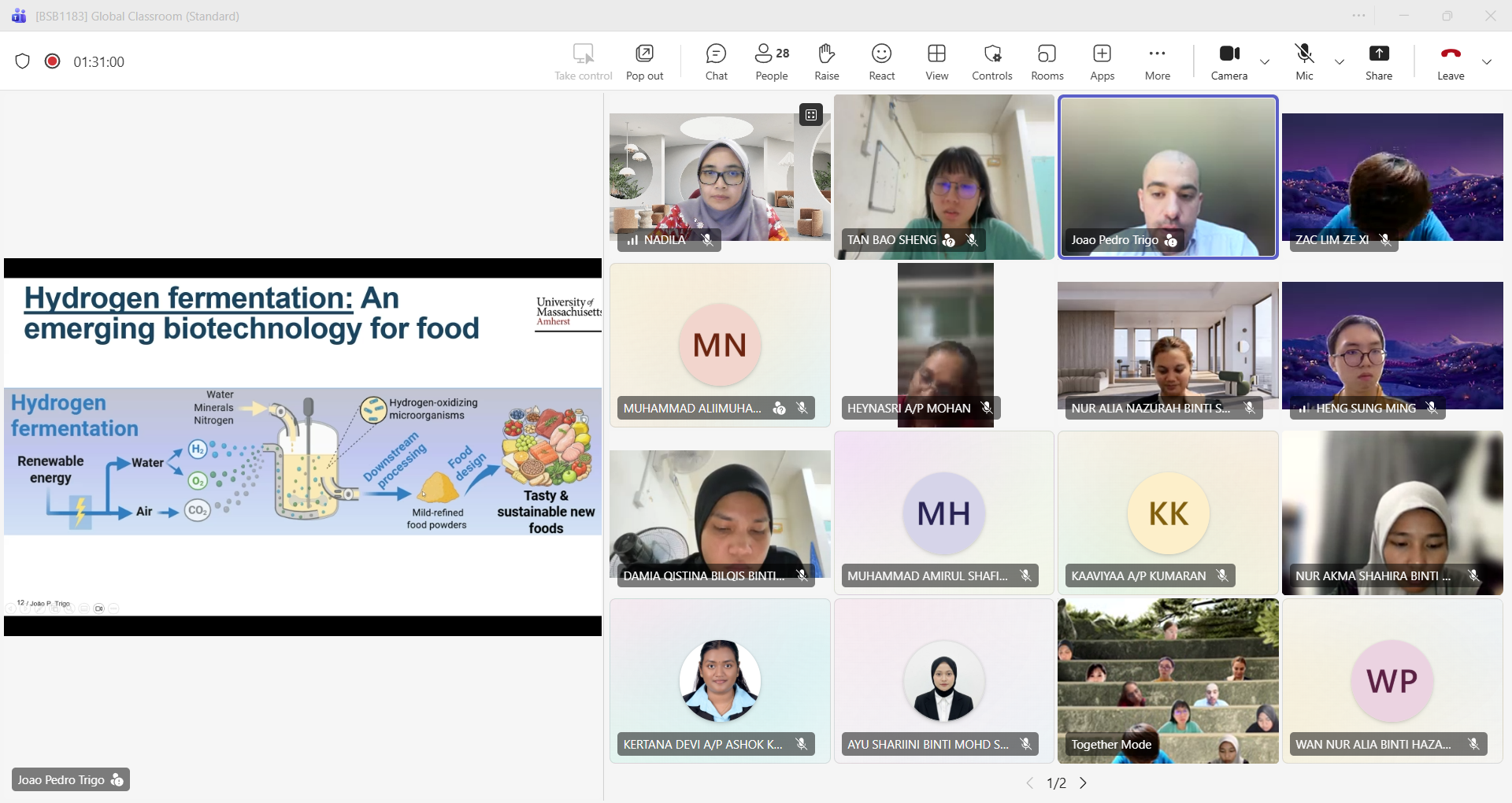
The initiative comprised four sessions, including an introductory session and three interactive learning sessions delivered by Dr. João. Throughout the programme, students explored the topic “Emerging Biotechnology Paths for Production of Sustainable Food Protein”, which highlighted recent developments in food biotechnology, alternative protein sources, sustainable food systems, and the role of biotechnology in addressing future food security challenges.
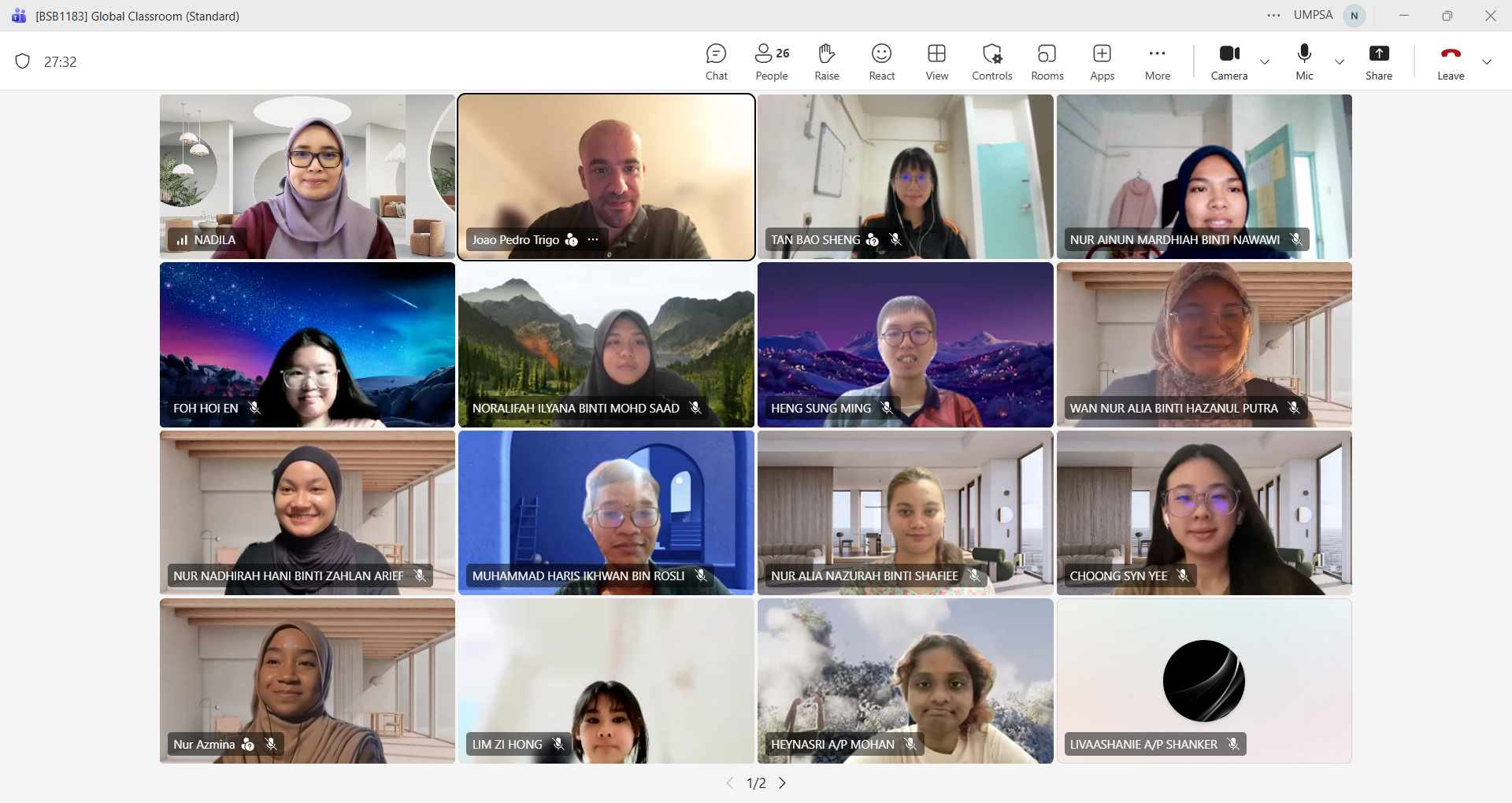
A total of 29 students participated in the programme. In addition to the lectures, each session incorporated interactive activities and discussions that encouraged active student participation and engagement. These activities provided opportunities for students to exchange ideas, share perspectives, and apply the concepts learned while interacting directly with an international researcher.
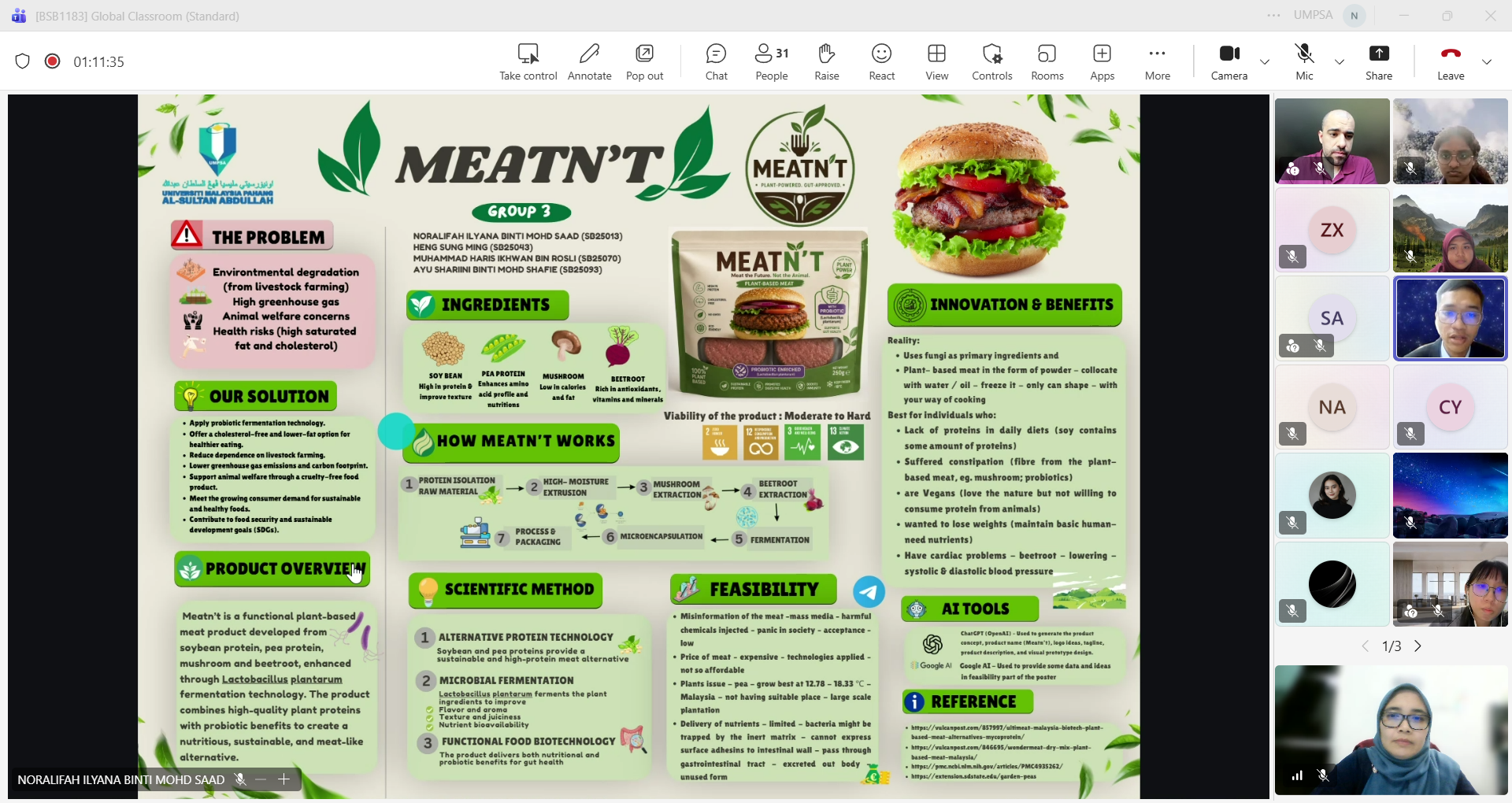
As part of the course assessment, students worked in groups to develop innovative food biotechnology product concepts aimed at addressing real-world challenges related to food, nutrition, sustainability, and food production. During the final session, students presented their ideas through poster presentations and product pitches. Dr. João also served as an evaluator and provided constructive feedback on the scientific concepts, innovation, and feasibility of the proposed products.
The initiative provided valuable international exposure and insights into global research trends in food science and biotechnology. Beyond acquiring knowledge in food biotechnology, students were encouraged to think critically and creatively about future applications of biotechnology in developing sustainable food solutions.
Overall, the programme enriched students’ learning experiences by connecting classroom knowledge with real-world applications and global perspectives in food biotechnology, while further supporting UMPSA’s commitment to internationalisation and globally connected learning.