
 - ZARIFAH BINTI SHAHRI.png)
 - ZARIFAH BINTI SHAHRI.png)
 - ZARIFAH BINTI SHAHRI.png)
 - ZARIFAH BINTI SHAHRI.png)
FIST Empowers Academics with AI-Driven Review Paper Writing for High-Impact Publications
24 June 2026 | UMPSA Gambang
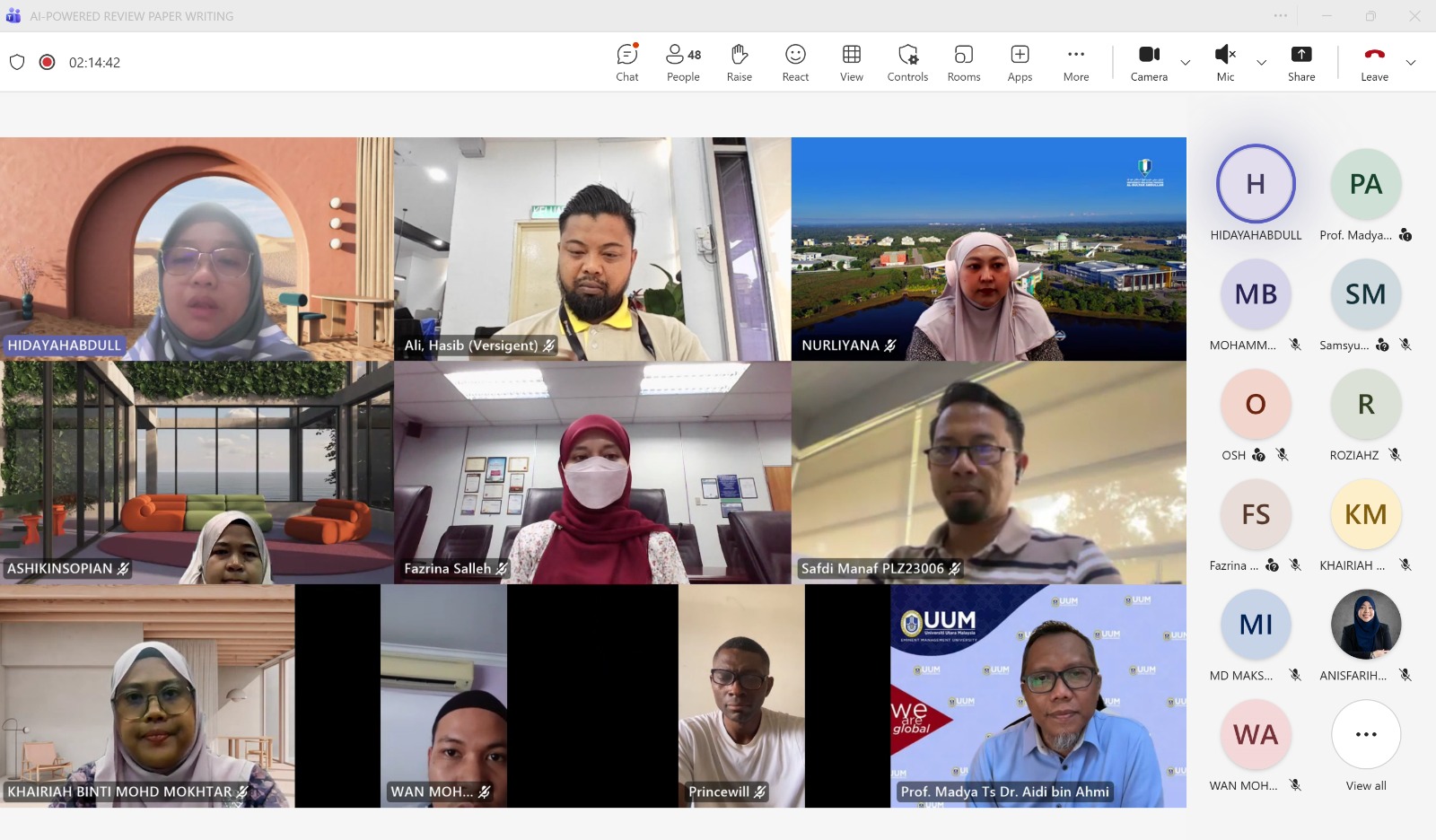
The Occupational Safety, Health and Environment (OSHE) Research Cluster, Faculty of Industrial Sciences and Technology (FIST), Universiti Malaysia Pahang Al-Sultan Abdullah (UMPSA), successfully organized the workshop “AI-Powered Review Paper Writing: From Literature Review to Publishable Manuscript” at Meeting Room 1, UMPSA Library Gambang.
The workshop attracted approximately 50 participants comprising lecturers and postgraduate students, reflecting the growing interest in integrating Artificial Intelligence (AI) into academic research and scholarly writing. The session was delivered by Assoc. Prof. Ts. Dr. Aidi Ahmi from Universiti Utara Malaysia (UUM), who shared practical strategies for leveraging AI to enhance the efficiency and quality of review paper development.
Throughout the workshop, participants were introduced to a systematic framework for transforming literature reviews into publishable manuscripts using AI-assisted approaches. The speaker demonstrated various AI-powered platforms and research tools that support literature organization, bibliometric analysis, manuscript development, and journal publication preparation.
Participants learned how AI can assist in generating research ideas, organizing evidence, identifying research gaps, drafting manuscript sections, and strengthening the overall structure of review papers. The session also highlighted emerging tools that can streamline the research writing process and reduce the time required for manuscript preparation.
One of the key highlights of the workshop was the emphasis on effective prompt engineering. Participants were guided on how to design precise and context-specific prompts to generate more accurate, relevant, and publication-ready outputs. Through live demonstrations, the speaker illustrated how different prompt structures can significantly influence the quality of AI-generated responses.
Importantly, participants were reminded that AI-generated content should never be accepted without critical evaluation. Researchers must verify and validate all outputs, including references, citations, facts, interpretations, and arguments, before incorporating them into academic manuscripts. This reinforces the principle that AI serves as a research assistant rather than a substitute for scholarly judgment and expertise.
The workshop concluded with discussions on ethical AI usage, academic integrity, and best practices for producing high-quality scholarly publications in the era of artificial intelligence. Participants gained valuable insights into balancing technological innovation with rigorous academic standards, enabling them to utilize AI responsibly while maintaining research credibility.
The successful organization of this workshop reflects the commitment of the OSHE Research Cluster, FIST UMPSA, to enhancing research excellence, publication productivity, and digital competency among academics and postgraduate researchers. The knowledge and skills acquired are expected to contribute towards higher-quality publications, increased research visibility, and a stronger culture of evidence-based and ethically responsible research within FIST and UMPSA.